Why Purpose-Led Branding in India Is Winning Consumer Trust in 2026
Why Purpose-Led Branding in India Is Winning Consumer Trust in 2026 Purpose-led branding in India is winning trust because Indian...
Read More → 
THE BEST MARKETING CONSULTANT IN DELHI
Vernacular content marketing helps brands connect with audiences by communicating in the regional languages they naturally think, speak, joke, and interact in. Content in Hindi, Marathi, Tamil, or Bengali can feel more familiar and easier to understand than English-only messaging. When people connect with the language and tone of a post, they are more likely to read, comment, share, and remember the brand.
That’s the short version. The rest of this post covers why it happens, where it works best, and how to start without wasting budget on translation that reads like translation.
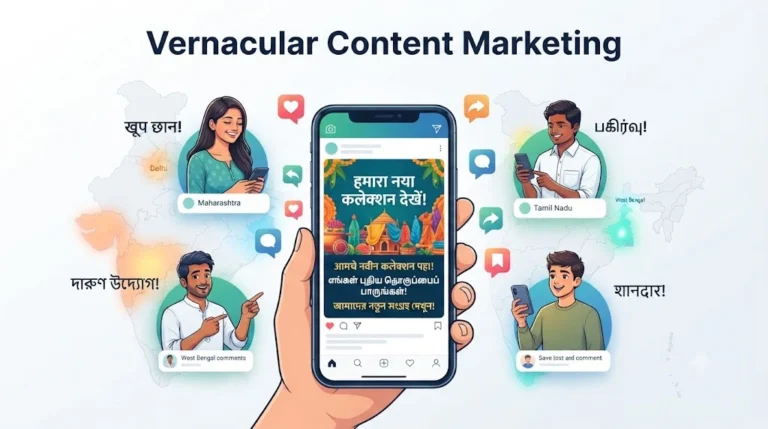
Vernacular content marketing means creating posts, captions, videos, and ads in a regional language, and not simply converting your English posts word by word. The difference matters more than most brands admit.
A translated post keeps the English structure and swaps the vocabulary. A vernacular post starts from how people in that region actually talk about the problem. A shopkeeper in Indore and a college student in Bengaluru don’t describe “value for money” the same way, and neither of them says it the way a translation tool would.
I’m not going to quote a percentage here, because a number pulled from nowhere helps nobody. The reasons are easy to see in how people use social platforms.
Less effort, more attention. Most people scroll fast. An English caption asks for a small extra step of processing, especially for someone who reads English well but lives their day in Hindi or Telugu. Content in their first language skips that step, so it gets read and not just scrolled past.
Comments come easier. People comment when replying feels effortless. A Hindi post gets Hindi replies, often with the casual, unfiltered tone that English comments rarely have. Those conversations tell the algorithm the post is worth showing to more people.
Trust builds faster. When a brand speaks your language, including local phrases and the right level of formality, it reads as “one of us.” For a small or mid-sized business selling to people who are wary of slick national brands, that familiarity is a real advantage.
Less competition. Most brands still post primarily in English. In many regional language feeds, you’re competing against far fewer polished, professional posts.
Much of the growth in internet use in India has come from smaller cities and towns, and many of these users are more comfortable in their regional language than in English. This is the audience that “Bharat market content” is meant to reach.
If your customers are in cities like Jaipur, Lucknow, Patna, Nagpur, Coimbatore, or Bhopal, an English-only content plan means you’re talking past a large part of your audience. A tier 2 city audience often has real buying power and fewer brands actively courting it in its own language.
This ties into hyperlocal marketing as well. A post that mentions a local festival, a local market, or a regional expression feels made for that place. English content aimed at “India” as one block rarely does.
Not every platform or format behaves the same way, so match the language to the format:
It means creating social media posts, videos, ads, and messages in a regional language such as Hindi, Marathi, Tamil, Bengali, or Telugu, written the way local people actually speak. It’s different from translating English posts word for word.
People read, comment on, and share content faster when it’s in the language they think in. It takes less effort, feels more personal, and invites replies, which social platforms treat as a sign the post is worth showing to more people.
No. If your buyers are mostly English-fluent urban professionals, English may still work well. Vernacular content tends to help most where the audience is more comfortable in their first language, such as consumer products, local services, and education. Test both before deciding.
Start with the language your current customers already speak, in the region where you sell or want to grow. Your existing orders, enquiries, and follower locations will usually point you to the answer.
It depends on your audience and platform. Many younger users type Hindi in Roman letters, while others prefer the native script for longer reading. Post the same idea both ways and see which gets more replies and shares.
Hyperlocal marketing speaks to a specific area, and language is one of the strongest ways to do that. A post that uses local phrases, festivals, and everyday situations feels made for that place, which a generic English post to “all of India” rarely does.
They’re fine for a first draft, but have a native speaker review anything you publish. Tone, slang, and cultural fit are where automated translation most often goes wrong, and an awkward post can hurt trust instead of building it.
Not always. Many brands begin with mixed-language posting on one account and split later if a language audience grows large enough. Watch which language gets better response before you decide to separate them.
Yes, and often very well, because WhatsApp is where many people are most comfortable chatting in their own language. Broadcasts, status updates, and replies in the customer’s language can feel far more personal. You can read more in my guide to WhatsApp marketing (add your Blog 2 link here).
Compare engagement rate, saves, shares, and comment quality between language versions of similar posts. For ads, compare cost per result for each language. Give it a few weeks of consistent posting before judging, and use your own numbers rather than general claims.
If you’re not sure which language, platform, or content style will work for your audience, that’s a good place to start a conversation. I’m Ritwik Sachdeva, and I help businesses plan and run social media that speaks to their customers. You can read more on my social media marketing consultant in Delhi page, or reach out directly:
Ritwik Sachdeva
Website: https://ritwiksachdeva.in/
Phone: 9289626386