Why Purpose-Led Branding in India Is Winning Consumer Trust in 2026
Why Purpose-Led Branding in India Is Winning Consumer Trust in 2026 Purpose-led branding in India is winning trust because Indian...
Read More → 
THE BEST MARKETING CONSULTANT IN DELHI
Purpose-led branding in India is winning trust because Indian consumers can now check what a brand says against what it does. A brand that states a clear purpose and backs it with visible choices (sourcing, pricing, how it treats customers, how it handles mistakes) earns loyalty. A brand that only prints a mission statement on its website gets ignored, or called out.
That gap between claim and proof is the real story of 2026.
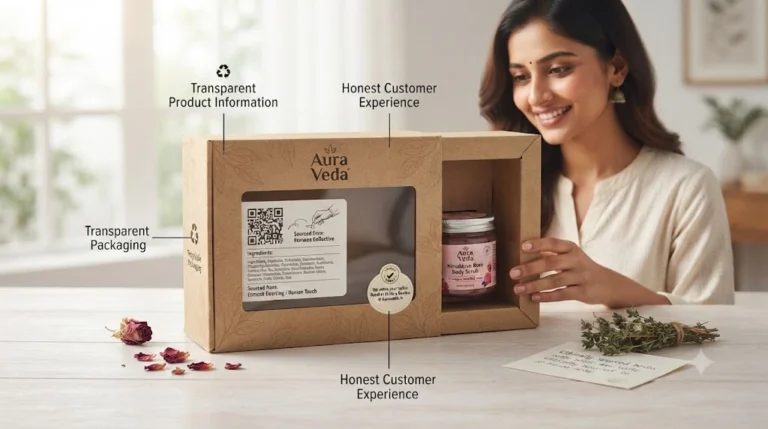
A few years ago, you could write “we care about the planet” under your logo and nobody asked questions. Today a customer can open Instagram, search your brand name, read reviews on three platforms, check your ingredient list or supplier details, and ask a friend in a WhatsApp group, all before buying a ₹499 product.
When people can verify so easily, vague promises become a liability. If your packaging says “eco-friendly” and the box is wrapped in three layers of plastic, someone will notice and post about it.
This is why brand trust now depends less on how well you talk and more on how consistent you are. The brands people recommend are usually the ones where the story, the product, and the behaviour all point in the same direction.
A purpose-driven brand isn’t one that supports a cause. It’s one that can answer a simple question: what do we stand for, and what will we refuse to do because of it?
That second half matters most. Purpose becomes believable when it costs you something. Some examples of what that looks like in practice:
None of these are dramatic. They’re small, repeatable decisions. Customers read them as character.
Ethical branding in India gets tested in three places more than anywhere else.
Pricing and promises. Fake discounts, “only 2 left” banners that never change, and delivery dates nobody can meet erode trust faster than a bad product does. Honest pricing is a branding decision, not just a sales one.
Sustainability claims. Sustainability branding is the most scrutinised category right now. Words like “green,” “natural,” and “clean” mean nothing without specifics. If you can name what you’ve actually changed (a material, a process, a supplier), say that. If you’re early in the journey, say that instead. Being honest about being unfinished reads as more credible than claiming perfection.
Handling mistakes. Every brand ships a late order, a wrong size, or a faulty batch eventually. What customers remember is whether you replied quickly and fixed it without making them argue. Your complaint-handling process is part of your brand identity, whether you’ve designed it or not.
Younger buyers aren’t necessarily more idealistic. They’re more practised at spotting performance. Gen Z consumer trust tends to go to brands that feel like they have a real point of view and a real person behind them, and it’s quickly withdrawn from brands that feel like they hired a copywriter to sound caring.
They also pay attention to how a brand behaves in public: how it replies to criticism, whether it quietly deletes uncomfortable comments, whether its values are the same on Instagram and in the delivery experience. Treat every public touchpoint as part of the brand.
Authentic brand storytelling is easy to describe and hard to do. A useful test: could a competitor copy-paste your “About” page and have it still make sense? If yes, it’s too generic.
Stronger stories are built from specifics:
You don’t need a big budget for this. A founder’s short video explaining a packaging change, or a plain-language page on how an order moves from your warehouse to the doorstep, builds more values-based marketing credibility than a polished campaign.
If you’re starting from scratch or rethinking an existing brand, work through it in this order:
This is also why purpose and visual identity can’t be treated separately. Your colours, tone, and layout should feel like the same brand that makes those promises. I cover that side in why consistent brand identity builds recognition and trust, which is the natural next read after this one.
It’s building a brand around a clear reason for existing beyond profit, then showing that reason through everyday decisions: product, pricing, communication, and service.
Yes, and small brands often do it more convincingly because the founder’s decisions are visible and customers can see who is behind the brand. You don’t need a big CSR budget, just consistent, honest choices.
CSR is usually a separate activity. A purpose-driven brand builds the purpose into how the core business operates. The test is whether the purpose would change a real business decision.
Make only claims you can specify and back up. Name the actual change, say what’s still in progress, and don’t use broad words like “eco-friendly” without explaining them.
They pay attention to whether a brand’s behaviour matches its messaging. Values matter to them mostly as a signal of honesty and consistency, and it’s usually the mismatch that turns them away.
Start with the problem you set out to solve and who you’re solving it for. Then define what you won’t compromise on. A visible brand identity can come after that foundation is clear.
There’s no fixed timeline, because trust comes from repeated proof, not one announcement. Most brands see it show up gradually as customers notice the same behaviour across several orders, replies, and public interactions.
Yes, but do it openly. If your business has grown or your original focus no longer fits, explain what changed and why. Quietly swapping the message while old promises are still visible online is what damages credibility.
Show the decision instead of announcing the value. A short note on why you changed your packaging, or a plain explanation of how you source something, lets customers draw their own conclusion. Keep the tone factual and let the proof do the work.
Your visuals are how the purpose gets recognised, so they should feel like the same brand that makes the promises. A purpose people believe in but can’t recognise at a glance is hard to remember, which is why consistent brand identity is the next step after defining your purpose
If you’re working out what your brand actually stands for, or you suspect your current branding says one thing while your business does another, that’s a good place to begin a conversation. You can see how I approach this in my branding consultant in Delhi page, or reach out directly.
Ritwik Sachdeva
Website: ritwiksachdeva.in
Phone: 9289626386