Why Purpose-Led Branding in India Is Winning Consumer Trust in 2026
Why Purpose-Led Branding in India Is Winning Consumer Trust in 2026 Purpose-led branding in India is winning trust because Indian...
Read More → 
THE BEST MARKETING CONSULTANT IN DELHI
If your brand videos still feel flat even after a good shoot, the problem usually isn’t the footage — it’s the edit. Professional video editing turns raw clips into content that actually holds attention, builds trust, and drives action, which is exactly why more Delhi businesses are turning to video editing services delhi instead of trying to piece things together in-house.
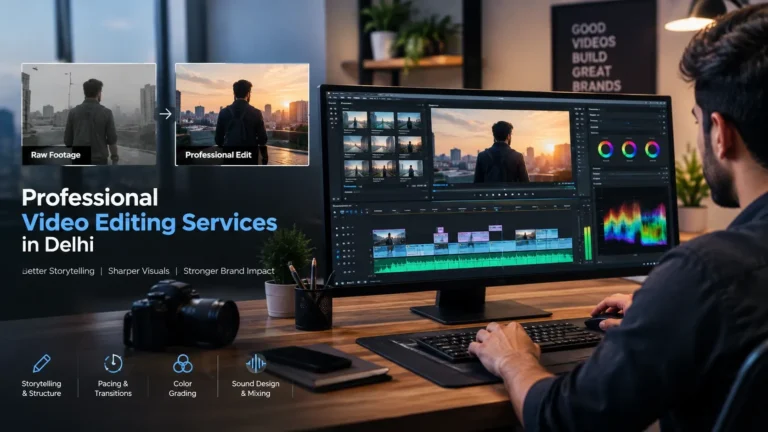
Anyone with a decent camera can shoot footage. Very few people can shape that footage into a story that makes someone stop scrolling. That gap is where professional video editing lives.
A raw video is just material. What separates scroll-past content from brand video content people actually watch is what happens after the camera stops rolling — the cuts, the rhythm, the sound, the color. Skip that step, or hand it to someone inexperienced, and even great footage ends up looking amateur.
Every edit is a series of choices about what to show, what to cut, and in what order — and those choices are the actual storytelling. A product demo edited as a dry feature list feels like an instruction manual. The same footage, edited around a problem-solution arc, feels like a reason to buy.
Professional video editing means someone is deliberately building an emotional arc: a hook in the first three seconds, tension or curiosity in the middle, a clear payoff at the end. That structure isn’t accidental — it’s a skill, and it’s the single biggest reason two brands can shoot similar footage and get completely different engagement numbers.
Pacing is the editor’s control over time — how long each shot holds, how quickly cuts happen, where the video breathes and where it pushes forward. Get pacing wrong and even interesting content feels boring; get it right and even simple content feels dynamic.
Fast-cut pacing works for energetic product reveals and social ads. Slower, more deliberate pacing suits brand stories or testimonials where the viewer needs a moment to connect. A good editor doesn’t apply one pacing style to everything — they read the content and match rhythm to intent, which is exactly the kind of judgment call that separates professional video editing from a quick trim-and-export job.
Color grading does two jobs at once — it fixes technical issues (exposure, white balance, mismatched lighting between shots) and it sets a visual identity. A brand that grades every video with the same tone, warmth, and contrast starts to feel recognizable within a second or two, even before the logo shows up.
Without grading, footage from different shoots, different cameras, or different days looks inconsistent side by side — and that inconsistency quietly signals “unpolished” to a viewer, even if they can’t name why.
Most people underestimate audio until it’s bad. Background hiss, mismatched music volume, dialogue that’s too quiet, or a jarring cut in the soundtrack — these are the fastest way to make a video feel unprofessional, regardless of how good the visuals are.
Sound design covers dialogue cleanup, background music selection and mixing, sound effects for emphasis, and making sure audio levels don’t spike or dip between cuts. Get it right and viewers don’t consciously notice it at all — which is exactly the point. Get it wrong and it’s the first thing they mention.
Put storytelling, pacing, color grading, and sound design together, and you get the difference between a video that gets watched for 3 seconds and one that gets watched all the way through — and shared. For a brand relying on video across social, ads, or a website, that difference compounds: better watch time, better ad performance, and content that actually looks like it belongs to a real, established business.
This is why more companies are moving away from ad-hoc editing and working with dedicated Video Editing Services built around exactly this kind of craft — someone whose full job is thinking about structure, rhythm, color, and sound, not squeezing edits in between other work.
Even short-form social content benefits — pacing and a clean cut in the first few seconds often matter more for a 15-second reel than for a longer campaign video, since that’s where most viewers decide whether to keep watching.
To a point. Good editing can improve pacing, color, and audio significantly, but no edit fully replaces poor lighting or unusable audio at the source — editing and shooting quality both matter.
More than most people expect. Two brands can shoot near-identical raw footage and end up with completely different results once color grading, pacing, and sound design are applied — the edit is where the brand identity actually gets built.
Basic editing is cutting clips together in order. Professional editing includes deliberate pacing decisions, color grading for consistency, sound design, and structuring the footage around a story arc — the layer that actually makes content perform.
“Fine” and “consistent” aren’t the same thing. Footage from different shoots, different lighting setups, or different days almost always has slight mismatches — grading is what makes a series of videos look like they belong to the same brand instead of looking stitched together.
It depends heavily on footage volume, complexity of the story, and how much color and sound work is needed — a simple social clip takes far less time than a multi-scene brand film with custom sound design, so timelines should be discussed per project rather than assumed.
It matters for both, arguably more for short content — with only a few seconds to hold attention, a harsh audio cut or mismatched music level can make someone scroll away before the message even lands.
Generally, more raw footage (including extra takes and B-roll) gives an editor more to work with for pacing and story structure — sending only the “best” clips upfront can actually limit how well the final edit flows.
Yes, this is typically done by studying the color tone, pacing style, and sound choices used in the existing content, then applying the same patterns to new footage so everything feels part of one consistent brand identity.
Often yes — ads usually need faster pacing and a stronger hook in the first few seconds since they’re competing for attention against paid placement, while organic content can sometimes afford a slightly slower build depending on the platform and audience.
If your videos are getting shot but not landing the way they should, the fix is usually in the edit. Get in touch to talk about your footage and what professional video editing could do for it.
📞 9289626386 🌐 ritwiksachdeva.in